


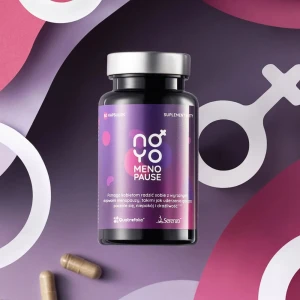
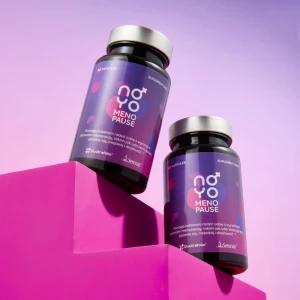
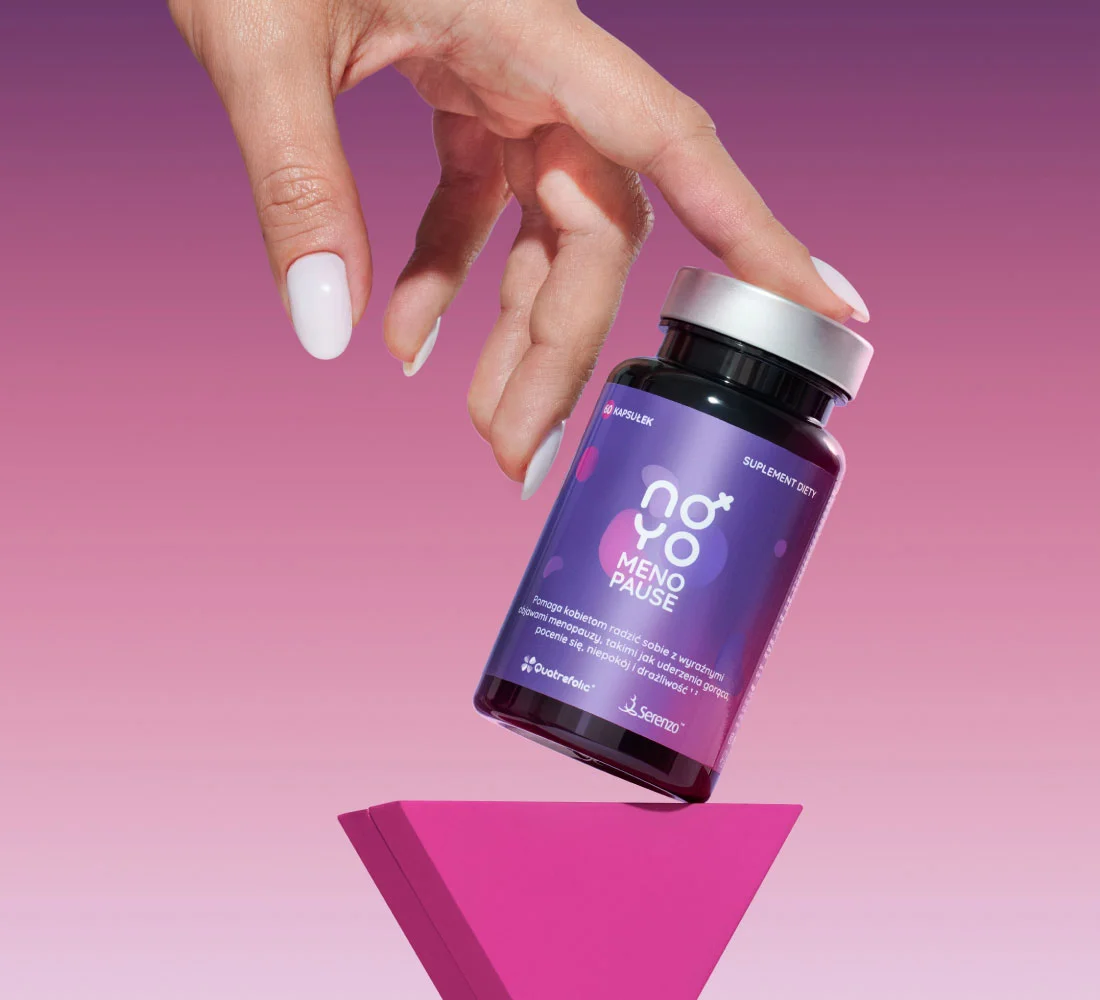
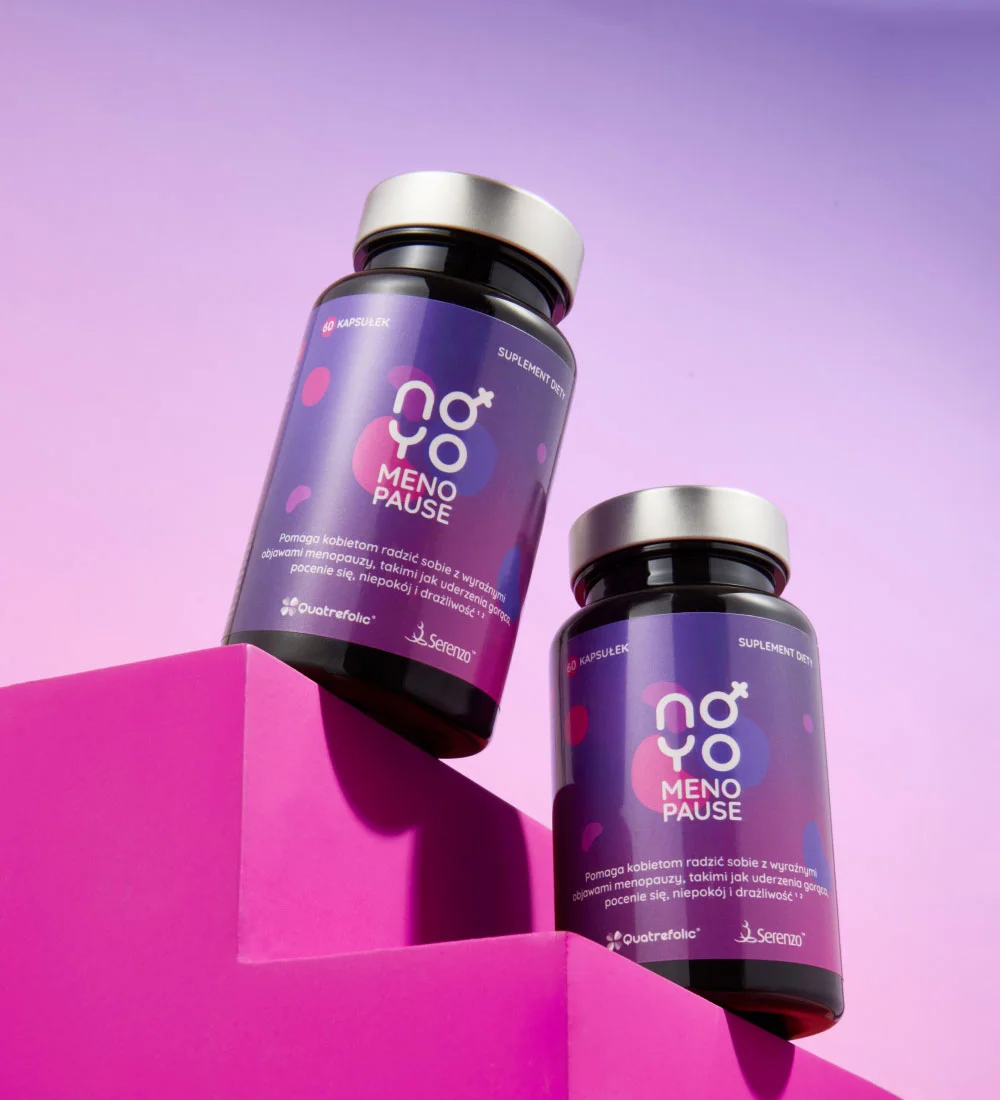
NOYO® Menopause
Embrace your femininity without the troublesome symptoms of menopause
 Supports women during menopause
 Helps reduce the severity of typical menopausal symptoms
 With vitamin D and B vitamins, it also supports heart and circulatory health, as well as bone and hormonal systems
 Contains proprietary ingredients Quatrefolic® and Serenzo™
- For whom?
- Ingredients
- Effects
- FAQ
- Reviews
NOYO® Menopause is for you if

You are going through menopause and want to reduce unwanted symptoms4, 6, 7, 8, 9, 10, 11

Changes in the body related to the climacteric interfere with your daily functioning4, 6, 7, 8, 9, 10, 11

You want to avoid using HRT due to side effects6, 7, 9

You are looking for a source of highly absorbable folic acid2

You observe the first signs of menopause: night sweats, irritability, hot flashes, decreased libido4, 6, 7, 8, 9, 10, 11

You are bothered by the psychological aspects of menopause and want to reach for ingredients that will reduce stress and anxiety in the long term4, 6, 7, 8, 9, 10, 11

You want to delay aging processes, which visibly accelerate during the climacteric1, 5, 6

You want to take care of the good condition of the circulatory, nervous, hormonal, or skeletal systems during and after menopause1, 2, 3, 6, 7, 9
Ingredients
See the complete list of ingredients
Studies on NOYO® Menopause ingredients confirm
- 1
Alleviation of characteristic menopause symptoms, such as: hot flashes, sweating, anxiety, and irritability4, 6, 7, 8, 9, 10, 11
- 2
Regulation of lipid balance and support for the good condition of the heart and circulatory system2, 3
- 3
Support for skeletal system health1, 2
- 4
Regulation of hormonal balance1, 2, 3
- 5
Source of antioxidants – delaying external signs of aging1, 4, 6
- 6
Reduction of stress and anxiety levels by up to 77%4

Expert’s advice
Menopause is not the easiest period in a woman's life. Changes in hormone levels can cause mood swings, hot flashes, weight gain, or the progression of osteoporosis. A healthy diet and physical activity help alleviate them, but appropriate supplementation can also prove beneficial. NOYO® Menopause product contains, among others, isoflavones that weaken the negative effects of estrogens, vitamin D supporting bone health, and the patented Serenzo™ ingredient, which improves well-being and has a calming effect. It is therefore worth reaching for this supplement to go through this change more gently.
Alicja Krajowska - Kukiel
Dietitian
Frequently asked questions
Find the answers to your questions
-
Can I combine NOYO® Menopause dietary supplement with other medications?
In case of taking other medications, supplementation should be consulted with the attending physician.
-
When is the best time to start using NOYO® Menopause dietary supplement?
It is best to start using the NOYO® Menopause dietary supplement when the first symptoms of a woman's climacteric process appear. The treatment can be used throughout menopause, without the need for breaks in taking the product.
-
How to use NOYO® Menopause dietary supplement?
NOYO® Menopause dietary supplement is best used twice a day: 1 capsule in the morning after breakfast and 1 capsule in the evening after dinner.
-
Can I use NOYO® Menopause dietary supplement with NOYO® Intima product?
Absolutely yes! This is the perfect combination for women during menopause. The action of NOYO® Intima will complement the action of the NOYO® Menopause dietary supplement and improve intimate comfort. NOYO® Intima eliminates discharge, dryness, discomfort, burning, and counteracts inflammation.
-
Are there any contraindications to using NOYO® Menopause dietary supplement?
NOYO® Menopause dietary supplement is intended for people under 75 years of age. People suffering from chronic or neoplastic diseases should consult their doctor before starting supplementation. If you are taking hormone therapy in connection with menopause, you should also discuss the possibility of NOYO® Menopause supplementation with your doctor.
-
Can NOYO® capsules be opened?
Absolutely — the capsules can be easily opened and added directly to a meal or smoothie. This action will not affect the effectiveness of the supplement. If this option is more convenient for you, you can take the product this way!
Combine products and achieve the perfect result
At NOYO®, we know that true self-care is holistic: it is the balance between what happens inside and how you care for yourself on the outside. Discover how to combine NOYO® dietary supplements and skincare to harness the synergy of their ingredients.

Comfort without infections of intimate areas – in just 7 days!1

An optimal serving of B vitamins with Quatrefolic®. Vegan friendly!
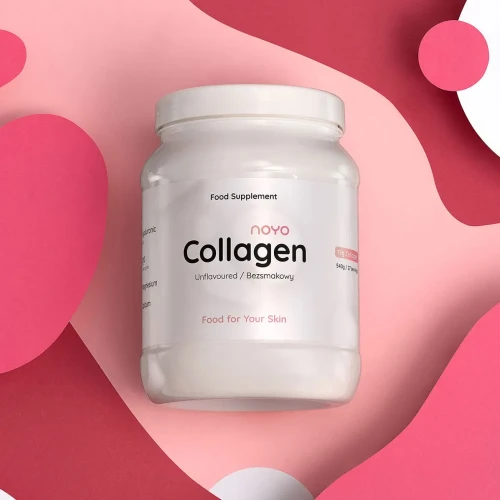
19g of collagen per serving – for healthy joints and firm skin!

18g of collagen per serving – for healthy joints and firm skin!

18g of collagen per serving – for healthy joints and firm skin!